Screenshot 2023-07-30 at 12.04.52

Buying a beer? Scan your face first

Biometric systems that can “read” a person’s face or palm image and determine if they’re too young for a beer are gaining traction at sports stadiums and liquor stores in the US.

While these tools are handy for alcohol sellers — and can offer more privacy for consumers than handing over a driver’s licence to a member of staff — they tap into fears about potential abuses of facial recognition systems.

Legislative proposals in NYC and Washington state would let bars, restaurants and other purveyors of adult products verify a customer’s age through biometric data — like a finger or palm image, or a retinal or face scan.

  • The New York bill would require all biometric data to be encrypted and prohibit businesses from selling it to third parties.

At the same time, biometric ID systems — sold by Amazon, Microsoft, CLEAR and many smaller vendors — are rolling out in real-world locations.

  • At the Las Vegas Raiders’ Allegiant Stadium, football fans who are enrolled in CLEAR’s ID system — the same one used at US airport security lines — can order Alcohol from their seats using facial recognition on their phone.
    • Fans of the NHL’s San Jose Sharks can also use the system at SAP Centre.
  • A brewery at Coors Field in Denver — home of baseball’s Colorado Rockies — recently started letting customers wave their palm over a scanner to verify their age instead of handing over a physical ID.
    • Those customers must be enrolled in Amazon One’s system — the same one used at Whole Foods. 

“No information is ever shared with a partner without your explicit consent,” Sam Hall, chief product officer at CLEAR, stated.

  • “We put up a screen [on your phone] that says, ‘the Las Vegas Raiders would like to know you’re over 21 — are you okay sharing this information?'”
  • “If you click ‘yes,’ they’re able to send a beer over to your seat without you ever having to pull an ID out of your pocket.”
  • That’s “way more appealing to most people than passing your license down” a row of stadium seats, he says — and, from the vendors’ perspective, time- and labour-saving.

Some systems require pre-enrolment — which can be done quickly through an app — but others use neural networks to estimate the age of the person looking at the screen at a checkout.

  • A system called MyCheckr “takes an image of your face, analyses that image, and returns whether or not you’re over the ‘challenge age'” to buy alcohol or cigarettes, explains Andrew O’Brien, product manager at Innovative Technology Ltd., the U.K. company behind it.
  • MyCheckr, being used at Bestway Group alcohol stores, uses an algorithm trained by looking at millions of people of various ages.
  • It’s a lot more reliable than a store clerk, states O’Brien — and completely anonymous. MyCheckr doesn’t store or transmit any data about the people whose faces it scans.

As these systems grow ubiquitous, there are mounting privacy concerns — despite the assurances — and real issues about racial discrimination.

  • While letting an underage person get away with buying a drink is a problem, worse still are facial recognition systems that falsely link people to crimes they didn’t commit.
  • There’s a movement to Ban facial recognition in stores.

Biometrics are convenient — allowing us to ditch our wallets and open our phones, among other things — and the number of uses is likely to expand.

Will be interesting to see who trials this in the UK on premise or indeed the off premise.
Picture 1

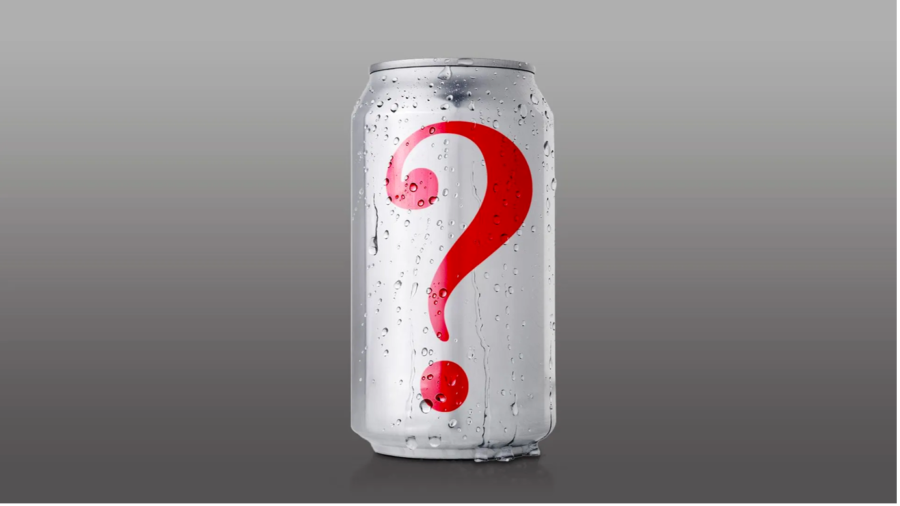
The decline of Diet Coke?

Despite Diet Coke’s cultish following, sales have been in decline over perceptions of its health risks.

Why it matters: A World Health Organisation cancer agency recently classified aspartame — a key sweetener — as possibly carcinogenic, though experts say that likely doesn’t mean you need to quit Diet Coke.

Driving the news: Consumer concern about aspartame health warnings has already hurt Diet Coke sales.

  • The soda “has been in a long-term decline as loyal consumers age out of the product,” Beverage Digest editor and publisher Duane Stanford stated recently.
  • Attempts to recruit younger Diet Coke drinkers — including adding new flavours — have failed.

Reality check: A 150-pound person could drink a dozen cans of Diet Coke in a day and still be within the WHO’s safe range.

Diet Coke drinkers might not need to kick the can completely — but the new aspartame label could be a moment to assess how much artificial sugar and added sugar is in your diet.

For the 12 months ending in March 2023, more than 1 in 4 adults said they were avoiding artificial sweeteners like aspartame in their diets, per a Circana/Health Attitudes & Behavioural Tracker.
Screenshot 2023-07-10 at 10.42.06

Our food tastes turn salty — and weird!

Salty snacks, alcohol-free cocktails and plant-based everything were trending at a leading showcase event for new foods last week.

  • In our quest for culinary novelty, some food trends are emerging that are just plain weird.
  • Sleep inducing foods like bedtime cookies, ice cream and cereal are a thing.
  • Flower-flavored foods and cocktails — tinged with lavender and rose— are suddenly everywhere.
  • “Upcycled” foods — made from ingredients that might otherwise have been dumped out or used for animal feed — are touting their tastiness.

Salty snacks — pretzels, crisps, popcorn, and the like — topped the list of bestselling specialty foods last year for the first time, according to the Specialty Food Association (SFA).

  • A “return to more social events and entertaining is driving sales” of this category, the SFA said in a trends report.

Food and drink makers are rewriting their playbooks to attract Gen Z consumers — whose taste buds, cravings and binge-worthiness meters are heavily linked to TikTok and Instagram.

  • “The generation born between 1997 and 2012 are accustomed to greater choice and are less willing to consume what they don’t immediately enjoy than previous generations,”.
  • To cater to their palates: “Beers are lighter. Drinks are more colourful. Coffees are colder,” and chicken is edging out beef.

In other food industry trends, there’s a heavy focus on sustainable packaging, regenerative agriculture, and other ESG-type considerations — as well as fun consumer experiences.

  • “Self-pour walls” have us pulling our own pints in restaurants.
  • More snacking and saltiness — particularly since one trend identified by a Whole Foods aficionado is “charcuterie at home.”
“Judging by the numbers in the first four months of ’23, we expect [crunchy] snacks to fuel growth in specialty through this year,” the SFA predicts.
Screenshot 2023-07-10 at 10.14.19

“Vegan” is out, “plant-based” is in

Food makers are tripping over themselves to introduce new “plant-based” products, but many are shying away from the term “vegan,” which some perceive as having negative or off-putting connotations.

Why it matters: The two terms aren’t always synonymous — “Vegan” tends to refer to a lifestyle as well as a diet, in which all animal products are avoided.

  • The semantic differences are critically important to marketers, as demand for animal-free foodstuffs balloons.
  • Companies seem to be choosing sides, describing their products as either “plant-based” or “vegan” — but not both.
  • In one camp: Wildfare “vegan pastas”, Popadelics’ “Surprisingly vegan” mushroom chips, Van Leeuwen’s Vegan ice cream — there’s even a bottled water called Shine water – marketing itself as a “vegan brand.”
  • In the other: Nestlé’s plant-based Toll House morsels, Kraft Heinz’s plant-based “Not Cheese” slices and “Not Mayo,” Jack & Friends plant-based jackfruit jerky — plus too many others to mention.

There’s been a conscious effort throughout the food world to make plant-based foods taste better — and to telegraph that deliciousness.

Zoom out: Some food start-up investors are steering clear of the “vegan” descriptor because the average consumer leans more toward a “reducitarian” diet, where they aim to reduce — but not eliminate — animal products.

“Vegan is kind of becoming a term that’s out of favour because people associate it with too much crunchiness, or whatever,” says Johnny Ream, a managing partner at Stray Dog Capital, who has invested in such plant-based companies as Beyond Meat and Purple Carrot.
Picture 1

Airports of the future..

Airports are slated to become more seamless and efficient, a new report finds, even as they get busier and larger to meet growing demand.

As the place where many trips begin and end, airports are a critical cog in the economy. Yet they’re also the source of many of our travel frustrations — flight delays, security bottlenecks and poor customer service.

  • But airports could also be a place where we actually enjoy leisure time — even if we’re not traveling.

A passenger experience “revolution” is coming over the next decade, according to a new report by the Oliver Wyman Forum, the research arm of the global consulting company by the same name.

  • “Our travel experience is about to get seamless, contactless, pleasant, fast and personalized,” states the study’s lead author, Rana Nawas.

Oliver Wyman researchers identified the biggest trends affecting the future of airports — from sustainability goals to transformational technologies — to forecast what to expect in 2030, 2040 and 2050.

Even by the end of the current decade, airports could be profoundly different, with more customised passenger services.

  • Think virtual queues or food delivered to your gate, plus more places to relax and shop.

Seattle-Tacoma International Airport and Los Angeles International Airport are among the first airports in North America to test virtual queues, which let travellers skip the security line by making a digital reservation for TSA screening.

  • Detroit Metropolitan Airport has added a massive futuristic departure board that uses facial recognition tech to show travellers customized info about their flight.
  • Uruguay’s Carrasco International Airport is the first fully digital airport in Latin America, with curb-to-gate biometric journeys, per Oliver Wyman.

Many airports are quickly moving toward “touchless” technology using facial recognition, AI, automation and biometric scanners to smooth check-in and security or immigration clearances.

  • By 2040, touchless digital ID cards could replace paper passports, confirming a passenger’s identity, travel information and immigration status.
  • Combined with biometric technology, passengers could pass through security and immigration “tunnels” at a walking pace in a completely uninterrupted journey, forecasts Oliver Wyman.

If the security process is integrated with other modes of transportation, such as air taxis or fast trains, a passenger’s details could be verified even before they get to the airport.

  • And with personalised baggage pickup and drop-off services, passengers’ luggage could be sent ahead to the airport, so they’re unencumbered upon arrival.

Such a seamless experience would require secure data-sharing across a global travel industry, which could be a big hurdle.

  • “If my digital identity is shared, I need to know it is safe,” says Nawas. “Governments across the world need to accept each other’s security clearances.”
  • Passengers will most likely have to opt into such services, she adds.
  • “Not everybody will want this seamless, contactless experience if it means sharing their digital identity.”

With less airport space dedicated to check-in counters or security lines, terminals will have more places to relax or shop.

  • Expect airports to look more like Singapore’s Changi Airport, which already has “Jewel,” a dome-shaped attraction that houses a mix of retail, leisure, garden, and hotel amenities, as well as airport operations.
  • By connecting airports with other forms of transportation, areas around airports could be transformed as well, creating vibrant airport cities or “aerotropolises” with shopping centres, entertainment venues, recreation facilities and even schools, airport CEOs told Oliver Wyman.
Airports may become more than just a place to catch a plane — they could become destinations in and of themselves.